
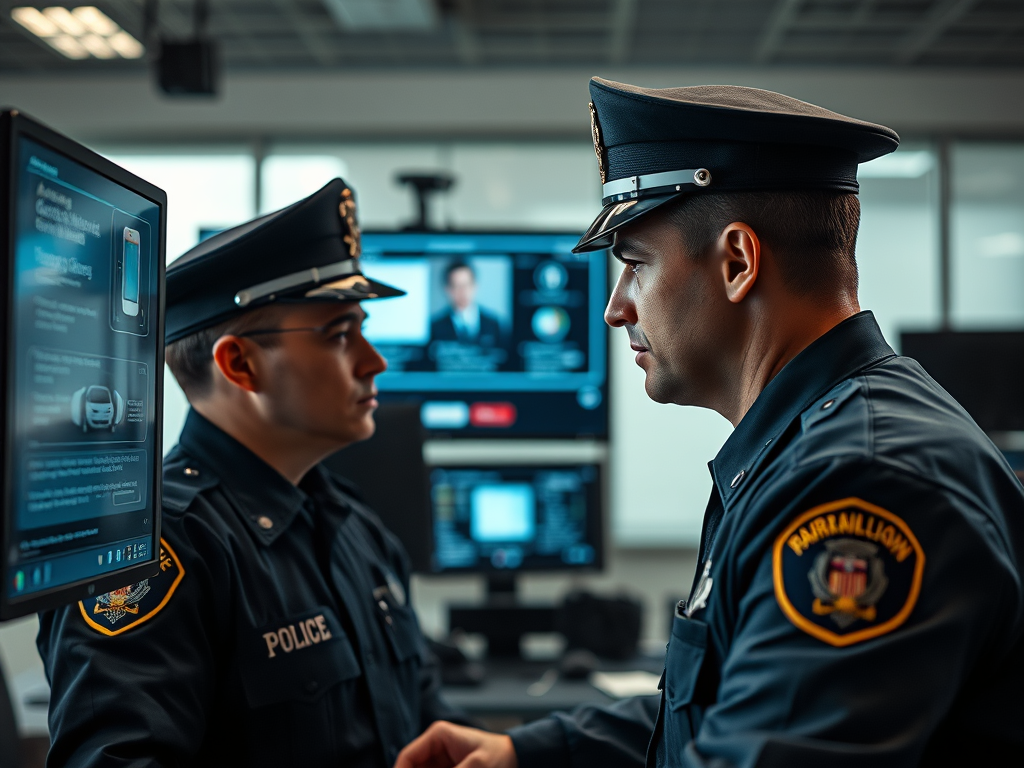
Every few months there’s a headline about AI doing something “revolutionary,” and most of the time, it’s a glorified demo. This one isn’t. Halton Regional Police just rolled out SARA (Smart Answering Routing Assistant) to handle non‑emergency calls 24/7. Translation: a real public safety agency is letting an AI receptionist front‑door their phone lines—today, not in some pilot in 2030.
Why do I care as a marketer and operator? Because if police services are comfortable trusting AI with the first touch, your business has zero excuse to keep bleeding leads to voicemail and missed calls.
The signal beneath the headline
Here’s what jumped out at me reading the release:
- Scope: SARA answers the non‑emergency line around the clock. It asks a few quick questions, figures out what the caller needs, and either resolves it or transfers to a human.
- Guardrails: The system instantly hands off if it senses an emergency, can’t understand the caller, detects unusual activity, or the caller needs translation. In other words—common‑sense fail‑safes.
- Volume reality: The police are swamped with non‑emergency calls (think: reports, information requests, admin stuff). Offloading the routine means humans focus on the critical.
- Partnership: They built and trained this with a specialist vendor—not a toy. Months of scenario testing before launch.
This is not “cute chatbot on a website.” This is high‑stakes, public‑facing, always‑on call handling—exactly where most businesses still drop the ball.
My take: consumer trust just leaped forward
People accept whatever the police normalize. Once residents comfortably speak to an AI receptionist when calling their local department, they’ll be fine doing the same with your med spa, dental clinic, roofing company, or law office—as long as you actually help them faster.
This is the biggest mental barrier for owners: “But my customers want a real person.” No. They want a real answer—and they want it now. If the AI responds in seconds, routes cleanly, books the appointment, and hands off to a human when it’s an edge case, they’re happy. Period.
What this means for your business (practically)
If a police service can map all those call flows, your flows are easy. Here’s the checklist I’d run this week:
- Define the one job: “Book qualified appointments” or “Resolve 80% of FAQs without a human.” Commit to a clear north star.
- Feed it your brain: Pricing ranges, service areas, insurance or financing, policies, prep instructions, FAQs, and your tone of voice.
- Script the first 30 seconds: Warm, confident, short. Example: “Hey, it’s Alex on the front desk—happy to help. Are you looking to book, get pricing, or ask a quick question?”
- Set sane guardrails: Emergency keywords, angry sentiment, or VIP leads → immediate human handover. No heroics.
- Connect the calendar and rules: Buffers, durations, no booking outside service areas, prep/confirmation SMS, rescheduling.
- Follow‑up automation: Missed calls → instant text back. Quotes → nudge at 1 hour, 24 hours, 3 days. No‑shows → re‑book link.
- Tighten with data: Review 10 transcripts a day for a week. Add missing FAQs. Shorten long answers. Nudge people to the next step.
Do that and you’ll outperform most human‑only front desks. No shade—just reality.
“Will it replace my receptionist?” (Blunt answer)
It will replace bad reception and supercharge good teams. Think of the AI as triage + scheduling + FAQ muscle. Your human team handles nuance, sales judgment, and relationship building. Payroll becomes sane. Customers get speed. You get fewer “sorry, we missed you” moments.
Three big lessons from SARA you should steal
- Speed is safety (and sales). In emergencies, seconds matter. In sales, it’s the same—just a different kind of risk. The first responder on a lead usually wins.
- Guardrails build trust. Clear rules about when to hand off to a human make the whole system feel safer and smarter. Put yours in writing.
- Train on scenarios, not vibes. Don’t “let it freestyle.” Feed real call recordings, actual objections, and your weird edge cases until it’s boringly competent.
Niches where AI reception shines right now
- Home services: After‑hours calls, zip‑code filtering, emergency triage, instant scheduling.
- Healthcare & med spa: Pricing questions, prep instructions, package details, recurring treatment reminders.
- Professional services: Intake, document checklists, appointment coordination.
- Auto & dealership: Inventory Qs, test‑drive bookings, trade‑in pre‑quals.
If you book appointments, you qualify.
Metrics to watch (or you’ll fool yourself)
- Answer rate: % of inbound calls/chats answered in under 10 seconds.
- Booked per 100 conversations: This is your north star.
- Handover rate: How often you need a human (too high = under‑training; too low = you might be missing nuance).
- CSAT or quick thumbs‑up/down: Keep it simple; trend it weekly.
The move right now
Police in Ontario are comfortable letting an AI receptionist pick up the phone for non‑emergencies. If you’re still relying on voicemail and a “we’ll get back to you” autoresponder, you’re volunteering to lose to faster competitors.
Start with one location and one service. Give it 14 days. Track everything. You don’t need perfect—you need present and fast.
If you want help, this is what we deploy all day: we scope, script, train the agent on your business, wire up calendar + follow‑ups, and get it booking real appointments—fast. Message me and I’ll show you the exact blueprint we use.

Leave a Reply