
Category: ai-agents
-

5 Ways AI Agents Will Change Your Business in 2026
Google’s 2026 AI Agent Trends highlights a shift towards practical AI agent applications in the workplace. Organizations are leveraging these agents for routine tasks, enhancing productivity and customer experience. Key recommendations include defining clear workflows, measuring performance, training staff, and ensuring security. The focus is on creating an AI-ready workforce for sustained success.
-

The 10 Day Small Model Sprint, Turn Your Own Data Into Faster Answers
Last week we covered PayPal’s key move, put a smaller, fine tuned model into the Search and Discovery step to cut response time and operating cost, while keeping quality competitive on everyday questions (Sahami et al., 2025). This week we turn that insight into a practical sprint you can actually run, no data science department…
-

Agentic Commerce, But Fast: What PayPal’s New Research Means for Your Business
PayPal’s research reveals that employing a smaller, fine-tuned AI model in their search functionality leads to faster responses and reduced computing costs, enhancing customer experience. This strategy allows for quicker and more relevant replies, crucial for retaining users. It also enables businesses to deploy AI across more platforms effectively.
-

AI Exposure: Why Location Doesn’t Determine Impact
AI exposure is driven by task composition rather than geographic tech hubs. Regions with less visible AI may face significant vulnerability due to high administrative roles. Traditional metrics like GDP and unemployment fail to predict AI impact. Businesses must focus on task-based workflows, as AI disruption will follow skill sets and routine responsibilities.
-

The Hidden AI Impact on White-Collar Jobs
MIT’s Iceberg Index reveals that AI’s impact on white-collar jobs—particularly in administrative and professional services—exposes 11.7% of the workforce, significantly higher than in tech roles. This underlines the need for businesses to adapt workflows and for workers to prioritize tasks complemented by human creativity and judgment over routine tasks vulnerable to automation.
-
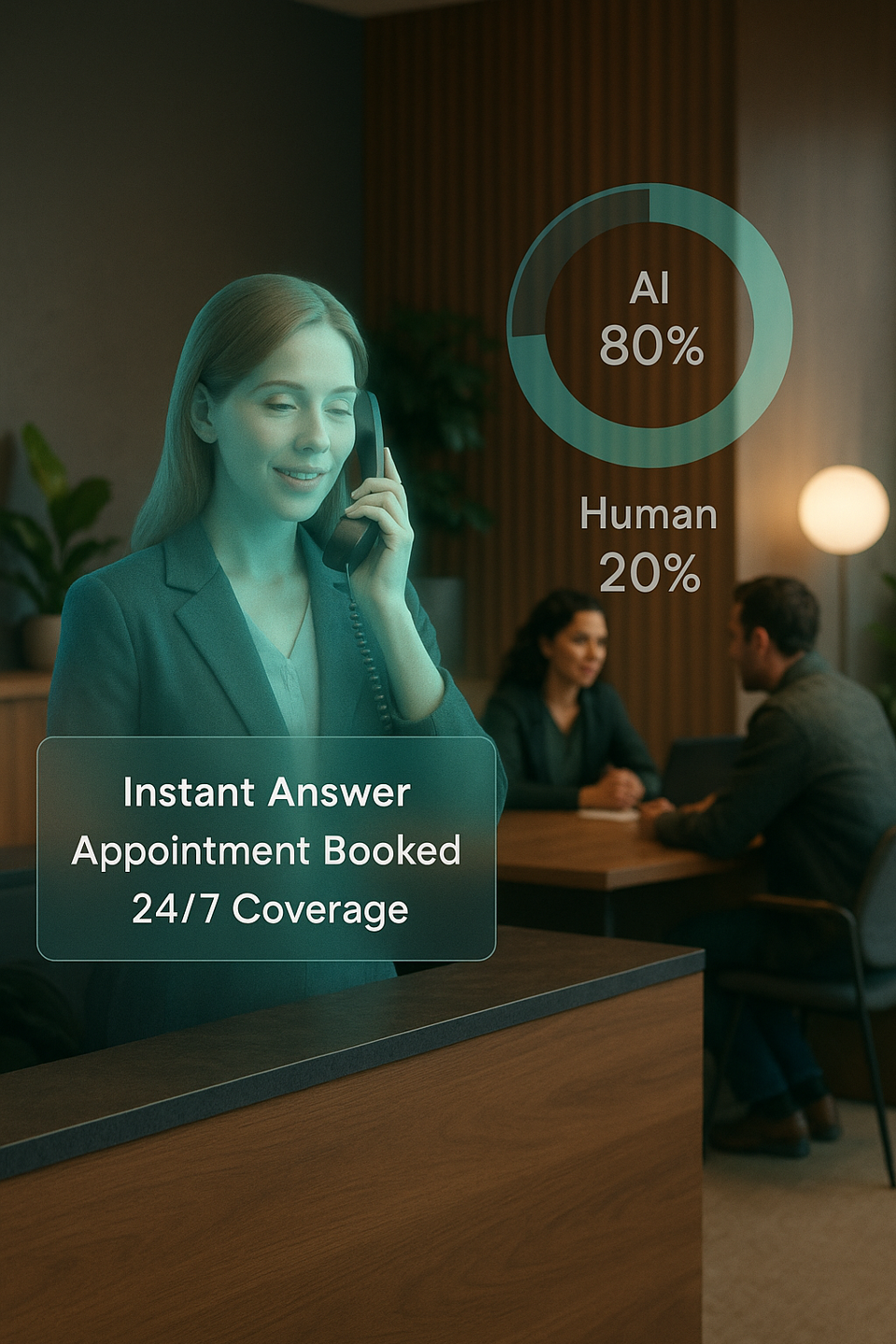
Call Centers Are Changing—Onshore Call Services With an AI Receptionist That Catches Every Missed Call
Customer service is evolving, with companies shifting from outsourced call centers to in-house operations using AI. This model allows AI to manage routine inquiries while human staff addresses complex issues. Benefits include increased efficiency, reduced wait times, and enhanced brand control. This approach preserves jobs by redeploying staff to higher-value tasks, ultimately improving customer experience.
-
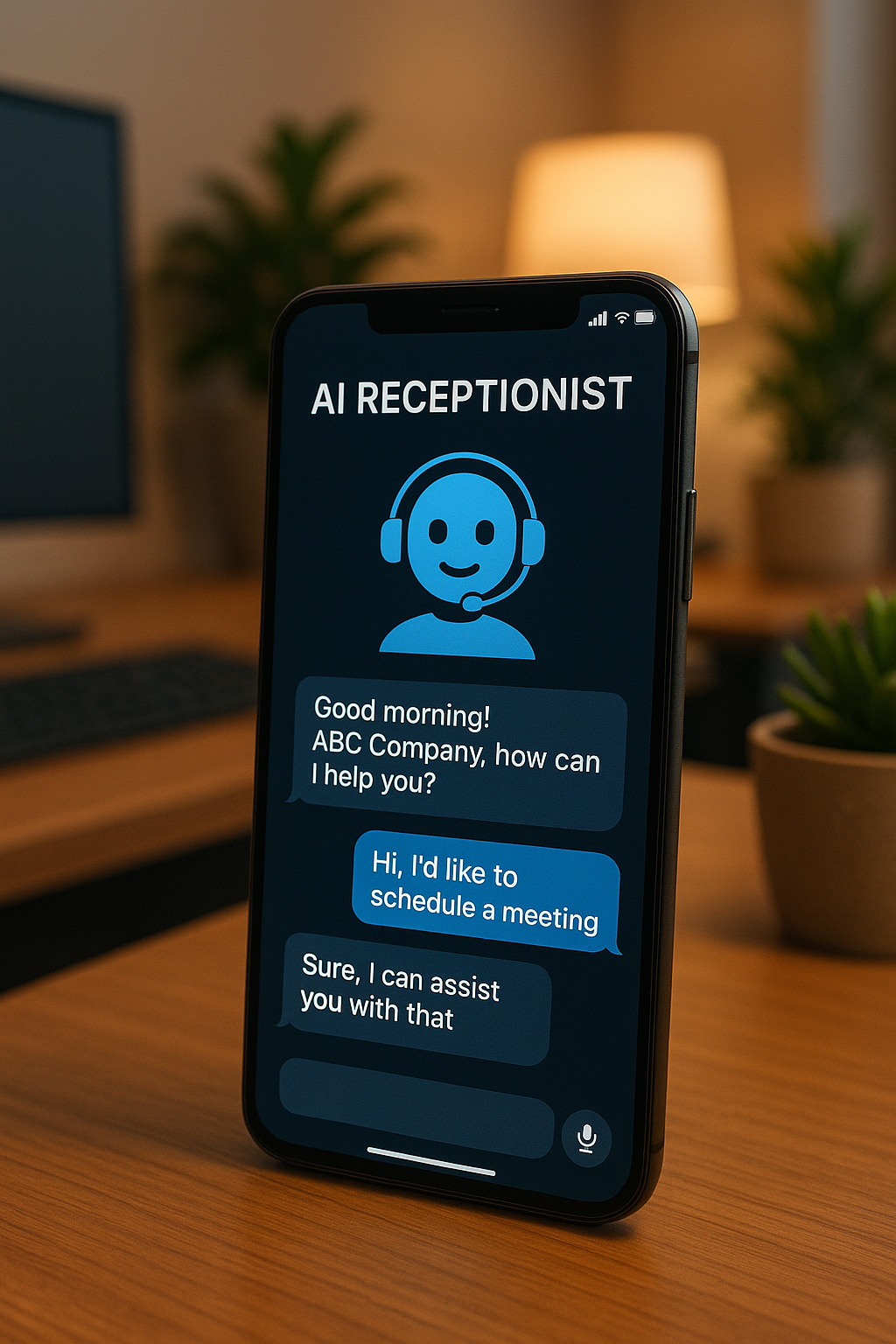
Google Now Automates Calls For Shoppers—Here’s What Big Tech Still Isn’t Doing (And How Your Business Can)
Google quietly confirmed something big: when people search or use Maps, Google can now call local businesses on the customer’s behalf to check price and availability, confirm hours or wait times, and even book appointments—automatically. Love it or hate it, that’s the direction. And it validates what we’ve been building for clients for the last…
-

AI Receptionists Just Went Mainstream (Thanks to Halton Police’s SARA)
Every few months there’s a headline about AI doing something “revolutionary,” and most of the time, it’s a glorified demo. This one isn’t. Halton Regional Police just rolled out SARA (Smart Answering Routing Assistant) to handle non‑emergency calls 24/7. Translation: a real public safety agency is letting an AI receptionist front‑door their phone lines—today, not…
-

Train Your AI Like a Teammate (Not a Tool)
This playbook emphasizes the importance of properly onboarding AI in sales to achieve significant results. It outlines steps to train an AI Agent, highlighting the necessity of clear roles, voice consistency, and real-time coaching. The guide also discusses using Ascent to streamline conversations and optimize workflows for increased efficiency and revenue.
-

How We Build AI Filters That Protect Your Time (And Calendar)
The content discusses how AI filters optimize lead generation processes by qualifying and routing inquiries effectively, preventing sales teams from being overwhelmed. These conversational checkpoints improve customer experience, save time, and enhance data quality. The document outlines implementation strategies, scoring methods, common mistakes, and expected outcomes when utilizing these filters.
-
AI in the DMs: Using AI to Qualify Leads in Chat
In modern sales, chat has become essential, moving from manual DMs to AI-powered conversations. AI chatbots provide instant responses, qualify leads, and enhance customer experiences by integrating various communication tools. Ascent’s platform centralizes these capabilities, allowing businesses to engage and convert leads efficiently while maintaining essential human interaction for closing deals.
-

🤖 ChatGPT-5: The Game-Changing Features You Need to Know
ChatGPT-5 isn’t just an upgrade—it’s a leap forward in how AI can understand, plan, and execute tasks for businesses and individuals.While many are excited about its calendar booking and scheduling skills, there’s a lot more under the hood that can transform how you work. Here’s a breakdown of the most important new capabilities that make…
-

🤖ChatGPT-5: Your Always-On Appointment Setter
Coordinating meetings shouldn’t feel like a full-time job. With ChatGPT-5, the world’s most advanced conversational AI yet, managing your calendar goes from a frustrating time-sink to a smooth, automated process that works exactly the way you do—without the back-and-forth emails, time zone confusion, or last-minute scrambles. This isn’t just about booking calls. It’s about optimizing…
-

🛑 Stop Losing Time & Money: AI Employees Save Hours Every Single Day
Time is your most expensive resource—and for most businesses, it’s being wasted on repetitive tasks like answering calls, chasing leads, writing content, and managing appointments. What if you could offload all of that… without hiring anyone? At Ascent Agency Collective, we deploy AI Employees—prebuilt, always-on AI agents that save your team hours per day while…
-

🗝️Unlock🔓 24/7 Growth: How AI Employees Are Revolutionizing Small Business Operations
What if your next top-performing employee wasn’t human—but worked 24/7, never called in sick, and could speak multiple languages? Welcome to the age of AI Employees—intelligent digital agents that are transforming how businesses attract leads, respond to customers, book appointments, follow up, and even close sales. At Ascent Agency Collective, we help businesses plug in…